What is a Shopify wholesale app?
Many merchants hear this phrase when they begin exploring B2B selling. As stores expand beyond retail customers, the need for structured bulk ordering and controlled access becomes more important. Yet many install tools before fully understanding what they actually do, which often leads to pricing overlap or operational confusion.
At its core, a Shopify wholesale app is a tool that adds bulk ordering logic, customer segmentation, and structured pricing rules to a Shopify store. Instead of creating a second storefront, merchants extend Shopify with rules for quantity control, buyer visibility, and operational workflows.
This guide explains the foundation so you can decide whether your store actually needs one.
Understanding What Is A Shopify Wholesale App
To answer what is a Shopify wholesale app clearly, we need to separate retail from wholesale operations. Shopify is built primarily for direct-to-consumer sales. Pricing is public. Checkout is instant. Orders are usually small and simple.
Wholesale requires structure. Buyers expect tiered pricing, pack sizes, reorder efficiency, and restricted access. That difference is exactly why what is a wholesale app becomes an important question for growing stores.
Why Retail Features Are Not Enough
Retail promotions are short-term. Wholesale pricing is an important part of long-term relationships.
When merchants rely only on default Shopify settings, they often struggle with quantity enforcement, visibility control, and operational stability. This is explained further in the 10 Best B2B Wholesale Apps (2026 Guide), where we break down platform limitations in detail and provide a complete comparison guide to help you choose the best.
Core Features Most Wholesale Apps Provide
Below are the core capabilities that typically define a strong wholesale system. If you want to have a good Shopify b2b wholesale app, then these are the features you need to look for.
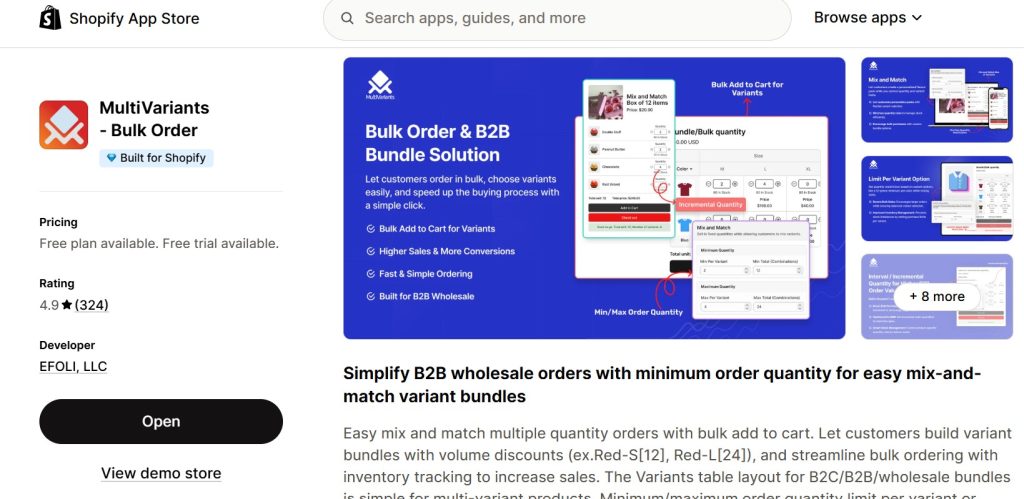
Bulk Ordering Interface
One major part of what is a Shopify wholesale app involves improving how bulk orders are placed. Buyers should be able to select multiple variants quickly from a structured grid or table layout. Ordering 100 units should feel fast and controlled.
This improves efficiency and reduces manual corrections.
Customer Segmentation
Customer specific pricing Shopify logic allows merchants to assign rules based on tags or account groups. Instead of using public coupons, pricing and visibility adjust automatically for approved buyers.
Minimum Order Rules
Minimum order quantity Shopify rules protect profitability. Wholesale buyers may need to purchase in fixed packs or meet a cart threshold before checkout.
This is not about promotion. It is about operational control.
Wholesale Discounting
In wholesale business, discount offers are not optional. They are part of the buying logic. When customers purchase in larger quantities, better pricing should apply automatically. This is not a temporary promotion. It is built into how bulk commerce works.
Shopify’s default discount settings are often too limited for advanced wholesale catalogs, especially when multiple variants are involved. Wholesale operations need a powerful app that offers bulk order discounts.
Wholesale Store Setup Basics
A wholesale store Shopify configuration usually begins with segmentation. Approved buyers receive access to specific collections and structured pricing rules. When asking what is a Shopify wholesale app, it helps to think of it as a system layer that activates only when the correct customer logs in.
Inventory stays centralized. Orders remain in one backend. Reporting stays unified across retail and wholesale activity
Shopify Plus and Wholesale Logic
Shopify Plus wholesale features include built-in B2B functionality. Larger operations may use those tools as part of their setup. However, not every merchant operates on Plus.
Many businesses use dedicated apps to add flexible bulk workflows, quantity logic, and structured visibility controls. When evaluating what is a Shopify wholesale app, it is useful to compare app-based flexibility with native Plus capabilities and decide which structure fits your operations.
Common Wholesale Challenges
Wholesale introduces complexity. It is not just about selling more units. It changes how your store operates.
Common challenges include
• Larger order volumes that increase inventory pressure and fulfillment coordination
• Negotiated margins that must remain stable across multiple buyer groups
• Multiple customer segments with different pricing structures and visibility rules
• Pack size enforcement and minimum quantity requirements that must apply automatically
• Repeat buyers who expect fast reordering without friction
These operational issues are explored more deeply in Challenges of B2B Wholesale, where real-world B2B pain points are explained clearly.
Understanding what is a Shopify wholesale app also means understanding the problems it is designed to solve.
Long Term Growth Planning
Wholesale on Shopify supports long-term scaling. Structured quantity rules and customer segmentation create predictable workflows. As order volume grows, automation reduces friction and administrative time.
Understanding what is a Shopify wholesale app early prevents rebuilding systems later. Clear decisions at the beginning saves operational time and avoids pricing conflicts as the business expands.
If you want to see how other Shopify merchants approach the decision, the guide 12 Questions Merchants Ask Before Choosing a Wholesale App (2026) can give useful direction.
Final Thoughts
What is a Shopify wholesale app ultimately comes down to structure. It adds controlled pricing, quantity rules, bulk ordering workflows, and visibility segmentation into your store. Merchants who clearly understand what is a Shopify wholesale app are less likely to install overlapping tools or create operational conflicts.
Wholesale is not just about larger orders. It is about predictable margins, efficient bulk workflows, and consistent processes across buyer groups. Once you understand what is a Shopify wholesale app, you can build a stable B2B layer inside Shopify with clarity and confidence.